Heavy Vehicle Load Offences (NHVR)
The Complete Guide for Drivers, Operators and Transport Businesses
As a Former NHVR Prosecutor and ODPP NSW Prosecutor, Eric Navea leverages inside regulatory experience to deliver aggressive court defence and compliance strategies for truck drivers, fleet operators, and transport businesses across Sydney.
- Former NHVR Prosecutor. Courtroom Advocate.
- Defending Truck Drivers & Transport Businesses Across NSW.
Received an NHVR load offence? Had your truck intercepted? Been issued with an infringement notice or court attendance notice?
If you have been hit with a heavy vehicle load offence, load restraint breach, rear projection issue or NHVR notice
You’re in the right place.
Load offences are some of the most misunderstood offences under the Heavy Vehicle National Law (HVNL). Many operators believe that if the load is physically on the trailer, everything is fine.
That’s wrong.
A load can be legal in weight, legal in dimensions, and still be illegal because it has not been loaded, positioned or restrained correctly.
One mistake can lead to:
- Significant fines
- NHVR investigations
- Court proceedings
- Vehicle defect notices
- Grounding of vehicles
- Chain of Responsibility (CoR) investigations
- Insurance complications
- Civil liability exposure
- Serious reputational damage
Talk with our lawyer now!
We'll be in touch in 24 hours
At Eric Navea Legal, we defend truck drivers, owner-drivers, transport operators, directors and heavy vehicle businesses facing NHVR investigations and prosecutions.
If you’ve been contacted by the NHVR, issued with an infringement notice or served with court documents, obtaining legal advice early can make a significant difference to the outcome.
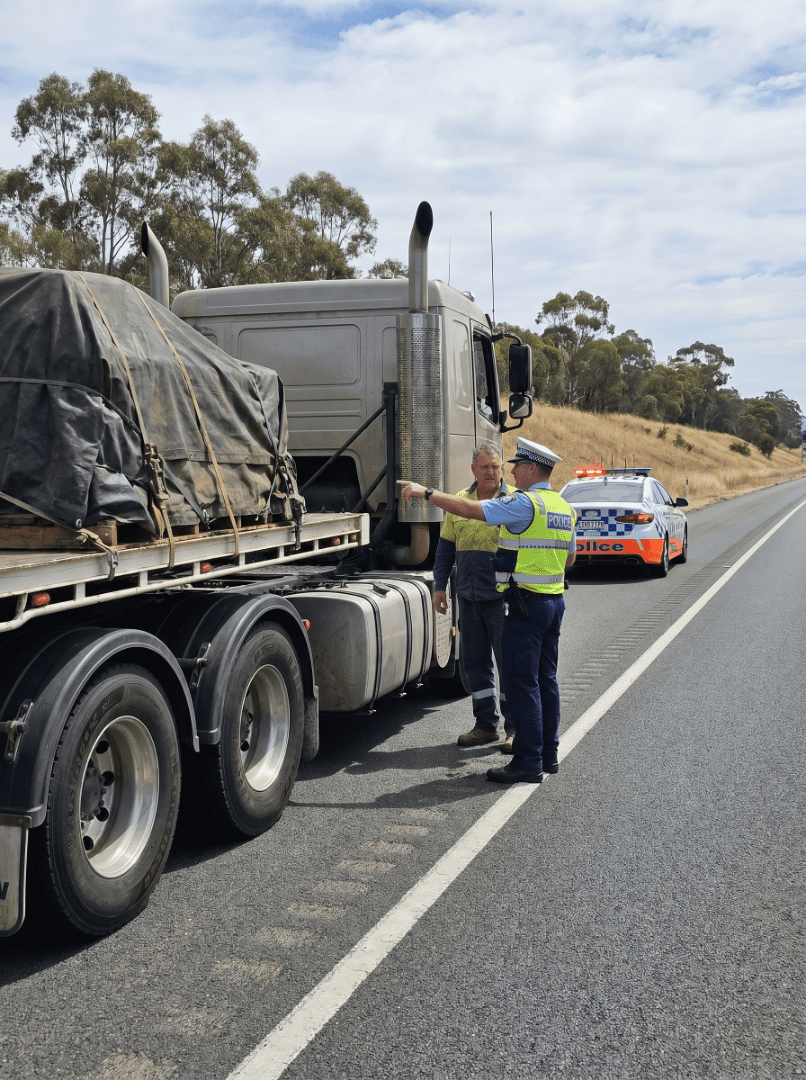
What Is A Heavy Vehicle Load Offence?
Under the Heavy Vehicle National Law, heavy vehicles must comply with strict loading requirements. According to the NHVR, a heavy vehicle must be loaded:
- So the vehicle remains safe and stable
- So the load is unlikely to fall or become dislodged
- Using an appropriate load restraint system
- In a way that does not create a safety risk to road users or infrastructure.
In simple terms: If the load can move, shift, fall, roll, slide, tip, bounce or affect the stability of the vehicle, you may have committed a loading offence.
Why NHVR Takes Load Offences So Seriously
A poorly restrained load can:
- Cause catastrophic crashes
- Kill or seriously injure road users
- Cause rollovers
- Damage roads and bridges
- Damage property
- Create major traffic disruptions
The NHVR specifically states that all parties involved in transport activities share responsibility for loading safety. This means responsibility doesn’t stop with the driver.
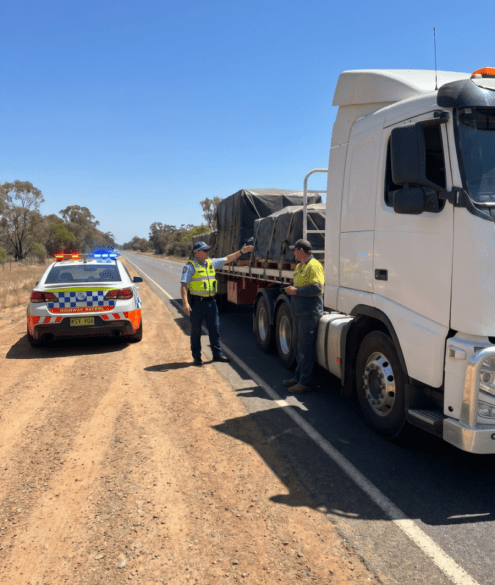
Heavy Vehicle Load Offences
Driving A Heavy Vehicle That Does Not Comply With Loading Requirements
A person must not drive, or permit another person to drive, a heavy vehicle that does not comply with loading requirements. Examples include:
- Inadequate load restraint
- Unsafe load positioning
- Unstable loads
- Loads capable of shifting during transport
- Loads capable of falling from the vehicle
- Failure to use appropriate restraint equipment
Failing To Properly Restrain A Load
A load must be restrained using an appropriate restraint system. Examples include:
- Insufficient straps
- Damaged straps
- Incorrect chains
- Incorrect restraint angles
- Inadequate blocking or bracing
- Failure to follow accepted restraint methods
Unsafe Load Placement
Even when a load is secured, it can still be illegal if it is positioned incorrectly. Examples include:
- Incorrect weight distribution
- Load placement causing instability
- Elevated rollover risk
- Uneven axle loading
- Unsafe centre of gravity
Permitting A Vehicle To Travel With An Unsafe Load
Operators, employers and businesses may commit offences by allowing a vehicle to travel with a non-compliant load. This is particularly important for:
- Transport companies
- Fleet operators
- Directors
- Dispatch managers
- Supervisors
Chain of Responsibility (CoR) Loading Breaches
The NHVR’s Chain of Responsibility laws mean multiple parties can be liable for loading offences. Potentially liable parties include:
- Operators
- Employers
- Prime contractors
- Schedulers
- Consignors
- Consignees
- Loaders
- Packers
- Executives and company directors
What Happens If The Load Falls Off?
This is where things become significantly more serious. Evidence that part of a load has fallen from a heavy vehicle may be used as evidence that loading requirements were not met.
Potential consequences include:
- Court prosecution
- Significant fines
- Civil claims
- Property damage claims
- Personal injury claims
- Insurance complications
- CoR investigations
- NHVR audits
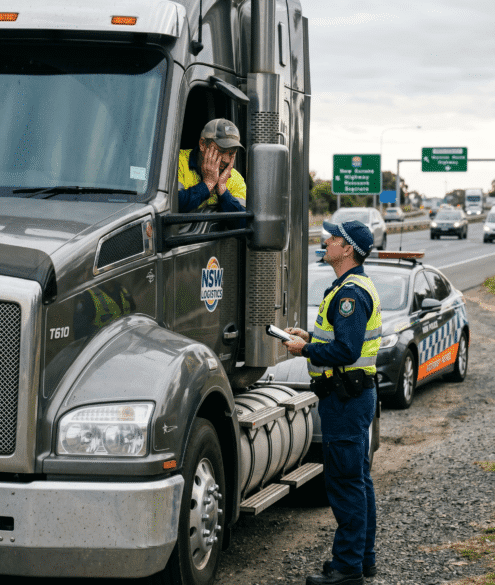
Primary Duty Exposure
In serious cases, loading failures can escalate beyond a simple loading offence. The NHVR may investigate whether a business breached its Primary Duty under the HVNL.
The NHVR describes Primary Duty breaches as among the most serious offences under the HVNL and notes that penalties can be substantial, with the most serious cases potentially involving imprisonment.
This commonly arises where businesses:
- Have no load restraint systems
- Ignore known loading risks
- Fail to train staff
- Repeatedly breach loading requirements
- Lack supervision and compliance processes

Defences To Load Offences
Every case is different. Potential issues requiring detailed legal assessment include:
- Whether the load was actually non-compliant
- Whether the NHVR classification is correct
- Whether the evidence supports the alleged breach category
- Whether the restraint method was appropriate
- Whether another party contributed to the alleged breach
- Whether CoR obligations were properly investigated
- Whether a reasonable excuse exists
Early legal advice can be critical.
How Eric Navea Legal Can Help
When your livelihood, licence, business and reputation are on the line, you need more than a general lawyer.
You need someone who understands:
- NHVR investigations
- Heavy Vehicle National Law
- Load restraint requirements
- Chain of Responsibility
- Court proceedings
- Enforcement strategy


As a former NHVR prosecutor, Eric Navea understands how investigations are conducted, how decisions are made and where opportunities may exist to challenge allegations or mitigate penalties.
We regularly assist with:
- NHVR investigations
- Infringement notices
- Court Attendance Notices
- Load offences
- Mass offences
- Dimension offences
- Executive liability matters
- Primary Duty investigations
- Chain of Responsibility matters
No.
Mass offences relate to weight limits.
Loading offences relate to how the load is positioned and restrained. A vehicle can be within legal mass limits and still commit a loading offence. (National Heavy Vehicle Regulator)
No. NHVR’s framework is broader. A load can be non-compliant before anything falls if the placement makes the vehicle unsafe or unstable, if the load is likely to fall or dislodge, or if the restraint system is not capable of meeting the performance standards.
Yes.
Multiple parties may be liable under the Chain of Responsibility laws.
Potentially, yes.
Directors and executives have separate obligations under the HVNL and may face scrutiny where systems and controls are inadequate.
For the direct section 111 loading offence, the current NHVR 2025/26 schedule shows court-imposed maximums of $4,110 for a minor-risk breach, $6,870 for a substantial-risk breach and $13,730 for a severe-risk breach. NHVR’s loading advice adds that, for the worst category of loading offence, the maximum penalty exceeds $13,700 for an individual and exceeds $68,000 for a business.
You can still be prosecuted.
The offence focuses on compliance with loading requirements, not simply whether a load ultimately fell.
This significantly increases enforcement risk and may be used as evidence that loading requirements were not met.
Yes. NHVR says officers may direct a driver or operator to immediately rectify the breach, or move the vehicle to a reasonable place or safe location and not move it again until the breach is rectified. That can create immediate downtime and commercial disruption.
Yes. The NHVR penalties schedule lists a separate offence for warning signals required for rear projection of loads under section 109(2), with a current maximum court penalty of $4,110 and an infringement amount of $411. NHVR’s size-and-projection material also says that even where projections are otherwise allowable, the vehicle and its load must still stay within the applicable length, width and rear overhang limits.
Yes. NHVR materials show that courts can make Supervisory Intervention Orders requiring training or other compliance steps at the offender’s expense, and NHVR case materials also record prohibition orders stopping operators from engaging in heavy vehicle loading for 12 months.
Charged With A Heavy Vehicle Load Offence?
A loading offence is not just a fine.
It can impact your licence, your business, your contracts, your insurance and your future.
Whether you are a driver, owner-driver, transport operator or company director, obtaining legal advice early can make a significant difference.
If you’ve received an NHVR infringement notice, court attendance notice, improvement notice, investigation letter or compliance action relating to a loading offence, contact Eric Navea Legal immediately.
The sooner you act, the more options you may have.
Talk with our lawyer now!
We'll be in touch in 24 hours
This page is general information only and does not replace legal advice about your specific matter.