Chain of Responsibility (CoR)
Legal Defence for Transport Operators & Heavy Vehicle Businesses
As a Former NHVR Prosecutor and ODPP NSW Prosecutor, Eric Navea leverages inside regulatory experience to deliver aggressive court defence and compliance strategies for truck drivers, fleet operators, and transport businesses across Sydney.
- Former NHVR Prosecutor. Courtroom Advocate.
- Defending Truck Drivers & Transport Businesses Across NSW.
Been contacted by the NHVR? Received a notice? Under investigation? Facing prosecution?
If you’re dealing with a Chain of Responsibility (CoR) issue, this is one of the most serious areas of heavy vehicle law. The NHVR does not just investigate drivers anymore. They investigate:
- Transport companies
- Directors
- Business owners
- Operators
- Schedulers
- Consignors
- Consignees
- Loaders
- Packers
- Managers
- Executives
In many cases, the penalties against businesses and executives are significantly greater than the penalties against drivers.
If you are facing a CoR investigation, infringement, improvement notice, prosecution or court proceedings, early legal advice can make a significant difference.
Request a Confidential Consultation
Get a response directly from a former NHVR Prosecutor. Take comfort in knowing help is on the way.
As a former NHVR Senior Prosecutor, Eric understands:
- How NHVR investigations are conducted
- How evidence is gathered
- What documents investigators look for
- How matters progress through the courts
- How prosecutions are assessed
- What mistakes can seriously damage your defence
What is Chain of Responsibility (CoR)?
According to the NHVR, Chain of Responsibility (CoR) is the part of the Heavy Vehicle National Law (HVNL) that makes parties other than drivers responsible for heavy vehicle safety. Everyone involved in the transport task can be legally accountable for safety outcomes.
Drivers are not always the people creating the risk. A driver may be pressured by:
- Unrealistic delivery deadlines
- Impossible schedules
- Overloaded vehicles
- Poor maintenance
- Unsafe loading practices
- Fatigue-inducing work demands
The law targets the people and businesses creating those risks.
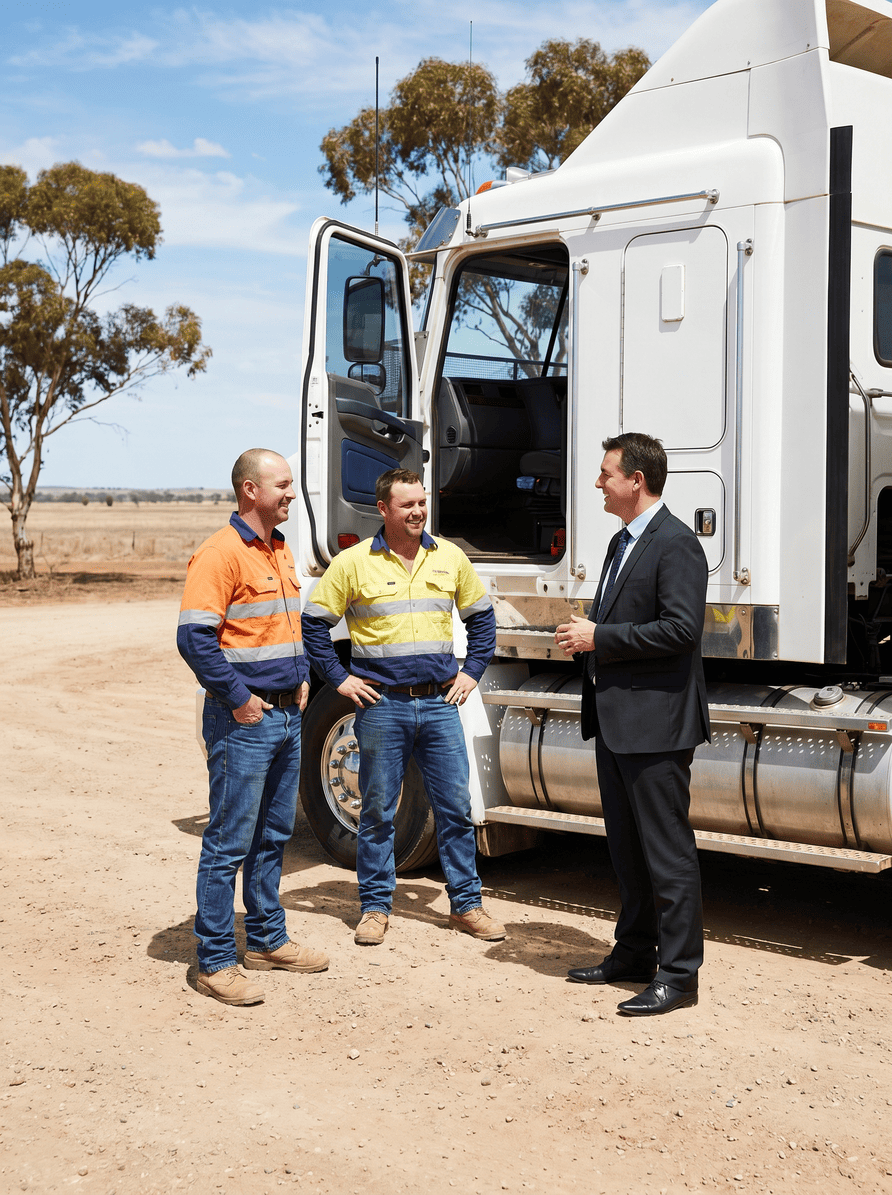
Who Can Be Liable Under CoR?
You may be legally responsible if you are:
Driver Employer: A business employing heavy vehicle drivers.
Prime Contractor: A person or business engaging a self-employed driver.
Operator: The party responsible for directing the control and use of a heavy vehicle.
Scheduler: Anyone influencing delivery times, schedules or driver work arrangements.
Consignor: The party sending goods.
Consignee: The party receiving goods.
Loader: The person loading goods.
Packer: The person packing goods.
Loading Manager: The person supervising loading activities.
Executive: Directors, managers and executives who control or influence the business.
The Primary Duty
The Primary Duty is the centrepiece of CoR law. The NHVR states that every party in the chain must ensure, so far as is reasonably practicable, the safety of their transport activities.
What this means is, you must do everything reasonably possible to eliminate or minimise safety risks created by your transport activities.
This duty extends beyond your own premises and covers risks throughout the transport journey.
What Activities Does CoR Cover?
CoR obligations apply to:
- Driver fatigue
- Speed compliance
- Vehicle maintenance
- Vehicle standards
- Vehicle safety
- Mass compliance
- Dimension compliance
- Loading compliance
- Load restraint
- Scheduling
- Dispatch operations
- Transport planning
- Driver supervision
- Contractor management
- Safety systems
- Risk management processes
Failure to ensure the safety of transport activities.
Examples include:
- Unsafe transport systems
- No fatigue controls
- No load restraint controls
- No maintenance systems
- No safety management systems
- Failure to identify risks
- Failure to manage known risks
This is the most serious CoR offence.
Directors and managers must exercise due diligence to ensure the business complies with CoR obligations.
This includes:
- Understanding transport risks
- Maintaining safety knowledge
- Ensuring adequate resources
- Implementing safety systems
- Monitoring compliance
- Responding to incidents and risks
Executives can be prosecuted personally.
Making requests that cause or encourage another person to breach the HVNL.
Examples:
- Telling drivers to speed
- Demanding unrealistic delivery times
- Encouraging fatigue breaches
- Pressuring drivers to overload vehicles
Contracts that effectively force transport parties to break the law.
Examples:
- Impossible deadlines
- Financial penalties for lawful rest breaks
- Payment systems encouraging speeding
- Contracts encouraging fatigue breaches
Examples:
- Scheduling that causes fatigue
- Failure to manage work and rest hours
- Encouraging work diary breaches
- Failure to monitor fatigue risks
Examples:
- Unrealistic delivery windows
- Pressure to meet impossible deadlines
- Incentive schemes encouraging speeding
Examples:
- Overloaded vehicles
- Incorrect axle weights
- Failure to verify loads
- Poor loading controls
Examples:
- Oversize vehicles
- Excess width
- Excess height
- Excess length
Examples:
- Unsafe loading
- Poor load restraint
- Unsecured freight
- Dangerous loading practices
Examples:
- Defective brakes
- Defective tyres
- Unsafe vehicles
- Failure to maintain roadworthiness
Click edit button to change this text. Lorem ipsum dolor sit amet, consectetur adipiscing elit. Ut elit tellus, luctus nec ullamcorper mattis, pulvinar dapibus leo.
Click edit button to change this text. Lorem ipsum dolor sit amet, consectetur adipiscing elit. Ut elit tellus, luctus nec ullamcorper mattis, pulvinar dapibus leo.
What Happens During an NHVR Investigation?
An investigation may involve:
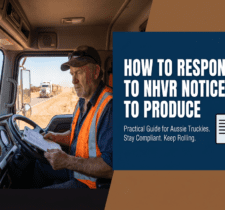
- Notices to Produce
- Interviews
- Electronic records analysis
- GPS data review
- Work diary analysis
- Fatigue records review
- Vehicle maintenance records
- Loading records
- Employment records
- Policies and procedures
- Contracts
- Email communications
- Mobile phone records
Early legal advice is critical before responding.
Defences to Chain of Responsibility Allegations
Potential defence issues may include:
- No breach occurred
- Lack of influence or control
- Reasonably practicable measures were in place
- Inadequate investigation
- Insufficient evidence
- Incorrect factual assumptions
- Defects in prosecution evidence
- Procedural fairness issues
A detailed review of the evidence is essential.
Why Clients Engage Eric Navea Legal
Few lawyers understand the NHVR from the inside.
As a former NHVR Senior Prosecutor, we understand:
- How investigations start
- How evidence is gathered
- How enforcement decisions are made
- How prosecutions are assessed
- How matters progress to court
- What arguments are persuasive
- What weaknesses exist in prosecutions
- 10+ Years Experience
- One-on-one with Eric
- Personalised advice tailored to your case
Most importantly:
We Represent Clients in Court
Court representation is at the core of what we do.
We regularly appear for:
- Truck drivers
- Owner drivers
- Transport operators
- Logistics companies
- Directors
- Executives
- Supply chain participants
Frequently Asked Questions
Yes.
Many CoR prosecutions involve people who never sat behind the wheel.
Yes. Executives have their own due diligence obligations.
Yes.
Serious Category 1 breaches can result in imprisonment of up to five years.
Yes. Corporations can face penalties exceeding $4 million for the most serious breaches.
It means doing everything reasonably able to be done to eliminate or minimise risks.
Obtain legal advice immediately before responding.
A: Even without an accident, you can still be prosecuted for breaching CoR duties. However, if an incident occurs, regulators will investigate up the chain of responsibility to see whose actions caused or contributed to it. Having complied diligently (proper training, policies, records) can be a strong defence.
No – CoR was created because drivers can’t bear all the blame alone. If, for example, a scheduler forced a driver to speed or an operator overloaded the vehicle, those parties can be charged under CoR. The law expressly forbids any party from causing or encouraging a driver to break the rules.
Do not ignore it. Legal advice should be obtained as early as possible.
You should obtain representation immediately. Early preparation can significantly affect the outcome.

The stakes are too high to guess your way through an NHVR matter.
Heavy Vehicle National Law prosecutions can involve:
- Massive fines
- Personal liability
- Director exposure
- Court proceedings
- Criminal records
- Imprisonment
- Business disruption
If you have been contacted by the NHVR, received a Notice to Produce, infringement notice, court attendance notice or prosecution paperwork, you need experienced legal representation immediately.
You are not expected to face the NHVR alone.
We defend truck drivers, transport operators, directors and heavy vehicle businesses throughout every stage of the process — from investigation through to court representation.
The earlier you get advice, the more options you may have.
Contact us now!
Our lawyer will be in touch in 24 hours.
This page is general information only and does not replace legal advice about your specific matter.