Minor Risk Breach
Any overload below the substantial threshold. Infringement notices are available.
Overloaded or facing an NHVR mass breach?
Get advice before you respond.
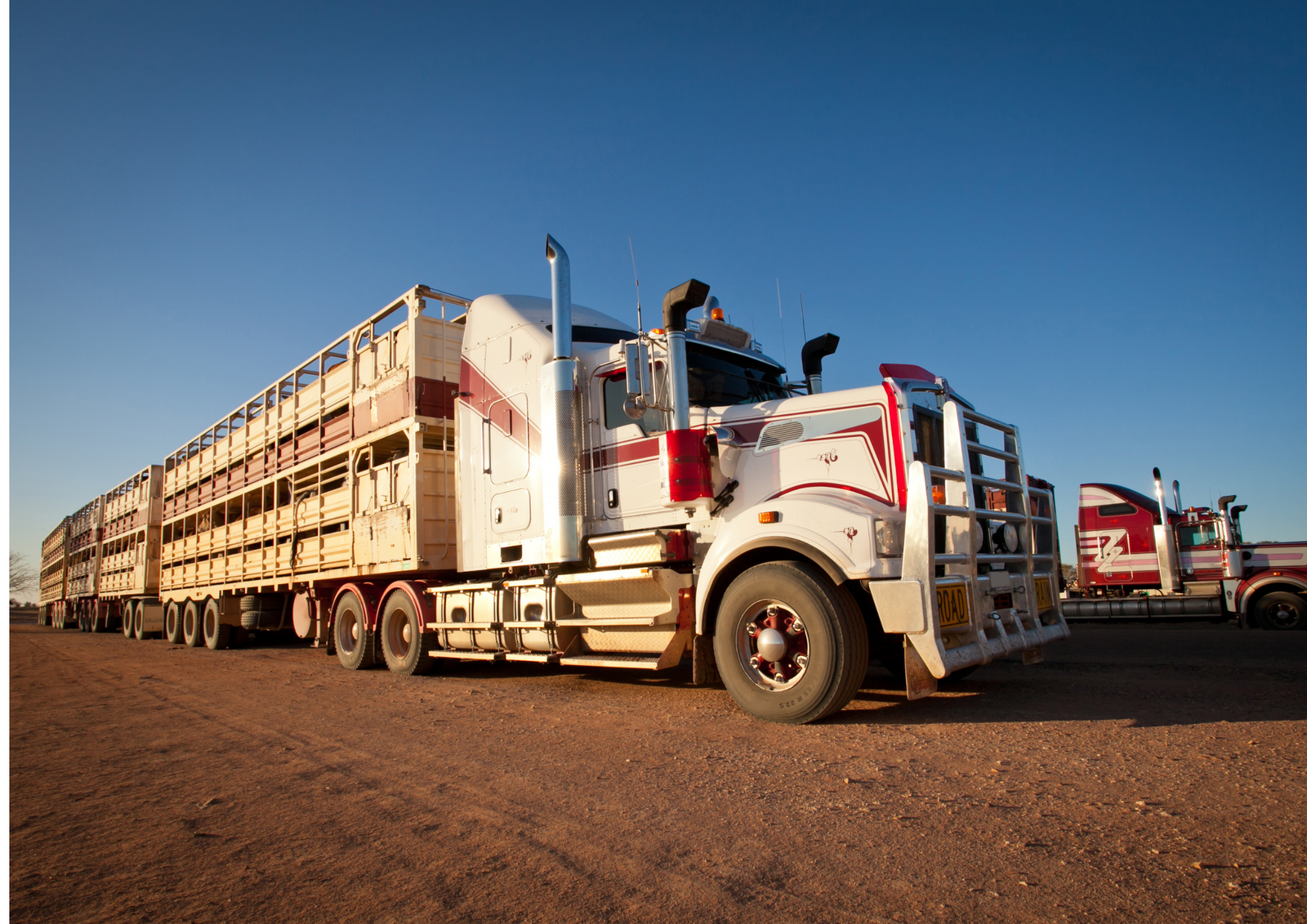
Under the Heavy Vehicle National Law (HVNL), mass breaches are treated as serious safety offences because overloaded vehicles increase stopping distances, place pressure on braking systems, create rollover risks, damage roads and bridges, and expose drivers, operators, schedulers, loaders and company directors to enforcement action.
If you’ve been:
Get advice early. The earlier you do, the more options may be available.
A mass offence occurs when a heavy vehicle exceeds a lawful mass limit.
This may include:
Mass offences can apply to a single axle, axle group or the entire vehicle combination.
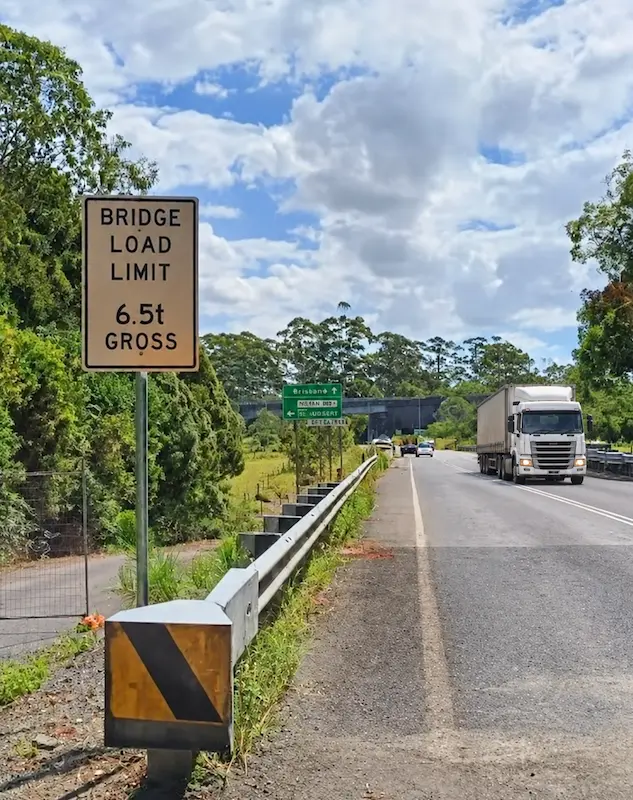
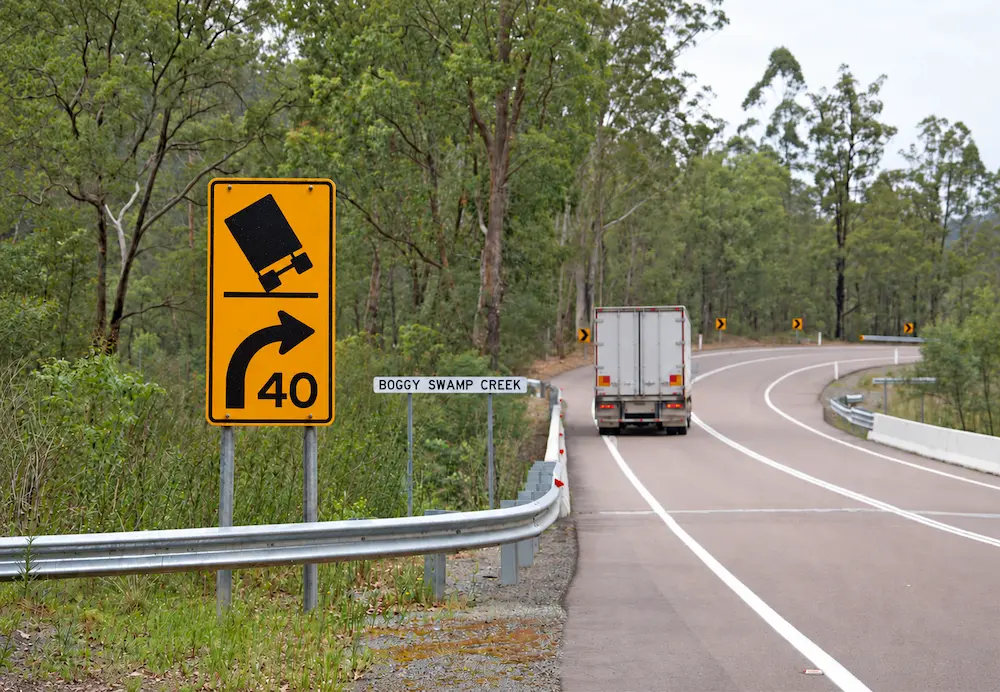
The NHVR considers overloaded vehicles to create risks including:
The greater the overload, the greater the enforcement response.
The NHVR has said overloaded vehicles compromise the stability, steering, performance and braking of a heavy vehicle.
The NHVR grades mass breaches by risk. The category decides the penalty, so it's one of the first things Eric checks.
Any overload below the substantial threshold. Infringement notices are available.
Starts at the higher of 105% of the maximum mass or 0.5 tonnes over it.
Starts at 120% of the maximum mass. Severe breaches can’t be dealt with by infringement notice and go to court.
| Limit | Substantial starts at | Severe starts at | So 6.4t on a 6t axle is |
|---|---|---|---|
| 6 tonne axle | 6.5t (limit + 0.5t is higher than 105%) | 7.2t | Minor |
| 20 tonne GVM | 21t (105% is higher than limit + 0.5t) | 24t | 21t would be substantial |
NHVR thresholds are rounded up to the nearest 0.1 tonne.
In a case the NHVR published in 2024, a scrap metal company had 69 mass breaches over two years, including 24 severe risk breaches. The company was fined $180,000 for a Category 1 primary duty offence, and its three directors were fined $8,500, $7,000 and $7,000 for failing to exercise due diligence. The NHVR said the company had failed to put systems in place to manage legal mass limits and to train its drivers and loaders.
| Breach | Maximum court penalty | Infringement amount |
|---|---|---|
| Minor risk | $5,630 | $563 |
| Substantial risk | $8,480 | $848 |
| Severe risk | $14,120, plus up to $710 for every 1% over 120%, with the extra amount capped at $28,230 | Not available. Goes to court |
Source: NHVR Schedule of Infringement Penalties and Demerit Points, 1 August 2026 to 30 June 2027. Mass offences don’t carry demerit points. Amounts are indexed every year.
From 1 August 2026, general mass limits increased by up to 1 tonne for vehicles and combinations under 55 tonnes, and by up to 2 tonnes for combinations over 55 tonnes. Some axle group limits also rose, including tandem axle groups from 16.5 to 17 tonnes and tri-axle groups from 20 to 21 tonnes.
If you’ve been charged with a mass offence, which limit applied on the day matters. Eric checks this as part of reviewing your matter.
Source: NHVR, Changes to Mass and Dimension Requirements fact sheet, August 2026.
The loaded vehicle is heavier than its maximum permitted mass.
A prime mover and trailer combination is heavier than its maximum permitted mass.
A single axle, or a tandem, tri-axle or quad-axle group, is over its limit, even when the total weight looks fine. Common with tippers, quarry, construction and agricultural loads.
The vehicle is over the mass limit set by its manufacturer, even if it's within the general limits.
Operating above general mass limits under Concessional or Higher Mass Limits, a notice or a permit, without meeting all its conditions.
One of the biggest misconceptions in transport law is that only the driver gets charged. That is wrong. The HVNL allows liability to extend across the Chain of Responsibility. Depending on the circumstances, multiple parties may be investigated or prosecuted.
Potential parties include:
Each of these parties has its own primary duty, and it can't be handed to someone else. That's why an overload can lead the NHVR to look at the loader, consignor and operator, not just the driver.
Many operators focus only on the dollar value of the fine. That is often the smallest problem. Mass offences can also lead to:
You may be required to attend court and defend allegations.
The vehicle may not be allowed to continue until the breach is fixed.
Lost productivity can exceed the value of the fine itself.
The NHVR may investigate upstream parties.
Repeated breaches can attract greater regulatory scrutiny.
Potential impacts on accreditation.
Particularly for transport companies operating under contracts with major customers.
Directors and officers may face personal exposure where systems are inadequate.
In our experience, most mass offences are not caused by deliberate misconduct.
Common causes include:
Liverpool Local Court
Maximum penalty $200,950. Result: $12,000 total fines.
Parramatta Local Court
Maximum penalty $75,100. Result: $7,500 fine.
Case outcomes depend on the individual facts and circumstances of each matter. Past results do not guarantee or predict future outcomes.
See All Results for Transport Operators →Practical guides from Eric Navea, written for transport businesses and drivers.
View all articlesLatest articles will load here on the live page.
No. Mass limits apply to single axles, axle groups, the whole vehicle and the whole combination. A truck can be over the limit on one axle group even when its total weight is within the limit.
The NHVR grades mass breaches by risk. A substantial breach starts at the higher of 105% of the maximum mass or 0.5 tonnes over it. A severe breach starts at 120% of the maximum mass. Anything below the substantial threshold is a minor breach. Thresholds are rounded up to the nearest 0.1 tonne.
Under the NHVR schedule for 1 August 2026 to 30 June 2027, a minor breach carries a maximum court penalty of $5,630 (infringement $563) and a substantial breach $8,480 (infringement $848). A severe breach carries $14,120, plus up to $710 for every 1% over 120%, with that extra amount capped at $28,230. Amounts are indexed every year.
No. Infringement notices aren’t available for severe mass breaches, so those matters go to court. For minor and substantial breaches, you can usually pay the infringement, elect to have the matter decided by a court, or ask the NHVR to review it.
No. The NHVR penalty schedule doesn’t attach demerit points to mass offences. Demerit points apply to some fatigue offences instead.
Yes. In a case the NHVR published in 2024, a scrap metal company with 69 mass breaches was fined $180,000 for a primary duty offence, and its three directors were each fined for failing to exercise due diligence.
Loaders, loading managers, packers, consignors and operators are all parties in the Chain of Responsibility, and each has its own primary duty that can’t be handed to someone else. The NHVR may look at several parties, not just the driver.
That can change which mass limit applied. Concessional Mass Limits, Higher Mass Limits, notices and permits can allow more weight, but only if every condition is met. Which limit applied on the day is one of the first things to check.
Potentially. The weighing evidence, the limit used and how the breach category was calculated all need to be checked carefully. Get advice before you accept the allegation.
It means the NHVR is prosecuting and you must attend court. Get legal advice before your first court date, so the evidence can be reviewed and your options explained early.
If you've been stopped by the NHVR, received an infringement notice, been directed to a weighbridge, or have been served with court documents, now is the time to act.
The sooner you obtain legal advice, the sooner you can understand your options, protect your business, and put a strategy in place.
Send through what you've received and Eric will be in touch about next steps.
Call Eric 0401 937 269This page is general information only and does not replace legal advice about your specific matter. It was last reviewed in October 2026. The NHVR may update the law, penalties and policies from time to time, so check the NHVR's official publications at nhvr.gov.au.