NHVR Dimension Breaches, Oversize Vehicles, Excess Dimension Penalties & Court Defence
As a Former NHVR Prosecutor and ODPP NSW Prosecutor, Eric Navea leverages inside regulatory experience to deliver aggressive court defence and compliance strategies for truck drivers, fleet operators, and transport businesses across Sydney.
- Former NHVR Prosecutor. Courtroom Advocate.
- Defending Truck Drivers & Transport Businesses Across NSW.
Received an NHVR infringement? Been pulled over for an oversize vehicle? Facing a court attendance notice for a dimension offence?
You are in the right place.
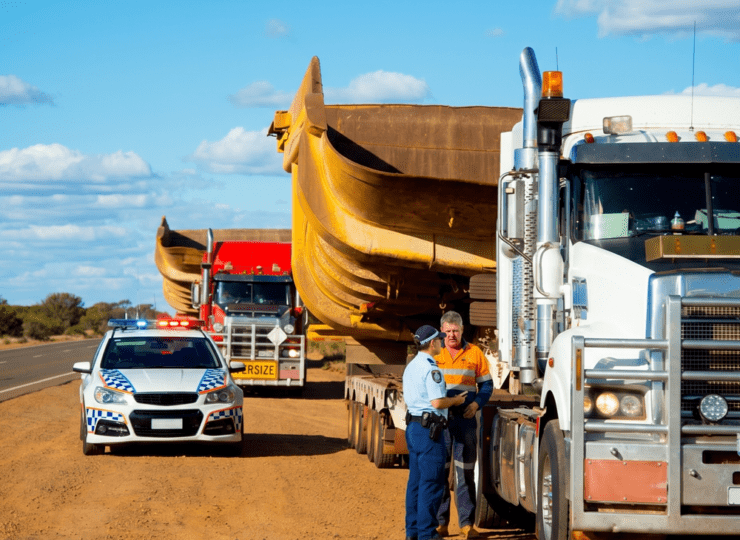
Dimension offences are some of the most heavily enforced offences under the Heavy Vehicle National Law (HVNL). A seemingly small mistake in vehicle height, width, length, rear overhang, projection, or permit compliance can result in substantial fines, prosecution, vehicle grounding, delayed deliveries, contract losses, and exposure for multiple parties in the Chain of Responsibility (CoR)
For many operators, the real cost is not the fine. The real cost is:
- Trucks parked up.
- Loads delayed.
- Customers lost.
- Contracts jeopardised.
- Compliance records damaged.
- NHVR scrutiny increasing.
If you have been accused of a dimension offence, early legal advice can make a significant difference.
Talk with our lawyer now!
We'll be in touch in 24 hours
What Is A Dimension Offence?
A dimension offence generally occurs when a heavy vehicle exceeds a dimension limit prescribed under the Heavy Vehicle (Mass, Dimension and Loading) National Regulation. This can involve:
Excessive Width:
Your vehicle or load exceeds the lawful width limit.
Excessive Height:
Your vehicle or load exceeds the lawful height limit.
Excessive Length:
Your vehicle or combination exceeds permitted length requirements.
Excessive Rear Overhang:
The rear projection exceeds what is legally permitted.
Excessive Forward Projection:
The front projection extends beyond lawful limits.
Side Projection Breaches:
Loads extending beyond vehicle sides without lawful authority.
Operating Contrary to a Permit:
Operating outside permit conditions.
Operating Contrary to a Notice:
Breaching conditions contained in an applicable notice.
Oversize Vehicle Non-Compliance:
Failing to comply with operational requirements applying to oversize vehicles.
Route Restriction Breaches:
Using roads not approved for the vehicle’s dimensions.
Failure to Comply with Dimension Requirements:
General breaches of the dimension provisions contained within the HVNL and MDL Regulations.
How NHVR Classifies Dimension Breaches
Minor Risk Breach
The lowest category.
Still prosecutable.
Still capable of resulting in significant financial penalties.
Substantial Risk Breach
A more serious breach.
The excess dimension has reached a level where NHVR considers the risk significantly increased.
Formal warnings generally become unavailable.
Severe Risk Breach
The most serious category of dimension breach.
Often results in:
- Significant penalties
- Court proceedings
- Increased enforcement attention
- Vehicle movement restrictions
- Serious commercial consequences
What To Do If You Receive A Dimension Offence
Step 1 – Do Not Panic
Receiving a notice does not automatically mean the allegation is correct.
Step 2 – Preserve Evidence
Gather:
- Permits
- Notices
- Vehicle dimensions
- Load details
- Route information
- Photographs
- NHVR documentation

Step 3 – Avoid Admissions
Well-intentioned explanations can sometimes create unnecessary difficulties.
Step 4 – Seek Specialist Heavy Vehicle Legal Advice
Heavy vehicle law is highly specialised.
Not every traffic lawyer understands the HVNL.
Why Clients Engage Eric Navea Legal
When your business is facing NHVR enforcement action, you need more than a general lawyer.
You need someone who understands:
- NHVR investigations
- Enforcement processes
- Heavy Vehicle National Law
- Chain of Responsibility
- Court proceedings
- Transport industry realities
Eric Navea is a former NHVR Senior Prosecutor who has worked inside the regulator and understands how investigations, enforcement decisions and prosecutions are conducted.
That experience provides valuable insight when defending heavy vehicle operators, drivers, directors and transport businesses.
- 10+ Years Experience
- One-on-one with Eric
- Personalised advice tailored to your case

In NHVR terms, it is a breach involving the legal size limits of a heavy vehicle or its load, including height, length, width, rear overhang and projection, together with related access, permit, notice, pilot, escort and document obligations.
For general access, NHVR says the key headline points are 2.5 m width unless the vehicle is a Safer Freight Vehicle, 4.3 m height unless a listed exception applies, and 19 m length for a standard combination other than a B-double, road train or vehicle carrier. NHVR also lists separate limits for B-doubles, road trains, vehicle carriers, buses, rear overhang and projecting loads.
NHVR says that if a vehicle or combination exceeds a general mass or dimension, it has restricted access to the road network and requires a notice or permit to travel.
No. NHVR says that for unladen vehicles and combinations, breaches of permissible dimension limits are treated as individual dimension breaches and are not categorised breaches. The risk-category tables apply where the load caused the breach.
It depends on the type of breach. NHVR says overall width is severe at 80 mm or more over, overall height is severe at 300 mm or more over, and overall length or rear overhang is severe at 600 mm or more over the maximum limit.
Yes. NHVR’s penalties schedule includes separate offences for keeping relevant notice documents, keeping permit copies, and class 2 authorisation documents while driving. Those document-related penalties run from $4,110 up to $5,470, with infringement amounts shown where applicable.
Yes. NHVR lists separate offences for contravening pilot or escort conditions and for using a pilot vehicle with a heavy vehicle that contravenes certain conditions of a mass or dimension exemption.
That can matter in more than one way. NHVR has rules on rear overhang limits, and the 2025/26 penalties schedule also includes a separate offence for warning signals required for rear projection of loads.
Yes. NHVR’s public investigation outcomes show dimension requirement allegations sitting alongside primary duty issues, and NHVR says sanctions can range from warnings to prosecution and injunctions.
Yes. Dimension offences are risk-based offences and do not require an accident to occur.
Depending on the circumstances, enforcement action can prevent a vehicle from continuing its journey until compliance is achieved.
Yes. The Chain of Responsibility framework allows multiple parties to be investigated and prosecuted where appropriate.
Absolutely. Many major customers require strict HVNL compliance and repeated breaches can create commercial consequences.
Not necessarily. Paying an infringement may amount to accepting liability. Before making a decision, obtain legal advice tailored to your circumstances.
Yes.Many matters involve technical, factual or legal issues that require careful examination.
The following are the most common mass-related offences encountered in the heavy vehicle industry.
Charged With A Heavy Vehicle Dimension Offence?
Whether you are:
- A truck driver
- Owner-driver
- Transport operator
- Fleet manager
- Director
- Consignor
- Scheduler
- Logistics business owner
early legal advice can make a significant difference.
A dimension offence is rarely just a fine.
It can affect your business, your reputation, your contracts and your future.
If you’ve received an NHVR infringement notice, court attendance notice, compliance action, or are under investigation for a heavy vehicle dimension offence, obtain specialist legal advice immediately.
The earlier you act, the more options you may have available.
Talk with our lawyer now!
We'll be in touch in 24 hours
Disclaimer: The information on this page was compiled in June 2026 and is intended for general informational purposes only. The National Heavy Vehicle Regulator (NHVR) may update legislation, penalties, policies, and enforcement practices from time to time. While every effort has been made to ensure the accuracy of the information at the time of publication, this page may not reflect the most current requirements and should not be relied upon as legal advice. Readers should refer to the NHVR’s official publications and seek professional advice where appropriate. https://www.nhvr.gov.au/