Overloaded? Facing an NHVR Mass Breach?
Get Legal Help Before It Gets Worse.
As a Former NHVR Prosecutor and ODPP NSW Prosecutor, Eric Navea leverages inside regulatory experience to deliver aggressive court defence and compliance strategies for truck drivers, fleet operators, and transport businesses across Sydney.
- Former NHVR Prosecutor. Courtroom Advocate.
- Defending Truck Drivers & Transport Businesses Across NSW.
A mass offence is not "just a weight issue."
Under the Heavy Vehicle National Law (HVNL), mass breaches are treated as serious safety offences because overloaded vehicles increase stopping distances, place pressure on braking systems, create rollover risks, damage roads and bridges, and expose drivers, operators, schedulers, loaders and company directors to enforcement action.
If you’ve been:
- Pulled over by the NHVR
- Weighed at a roadside inspection
- Issued with an infringement notice
- Directed to a weighbridge
- Charged with a mass offence
- Served with a court attendance notice
- Contacted regarding a Chain of Responsibility investigation
You should obtain legal advice immediately. The earlier you get advice, the more options may be available.
Talk with our lawyer now!
We'll be in touch in 24 hours
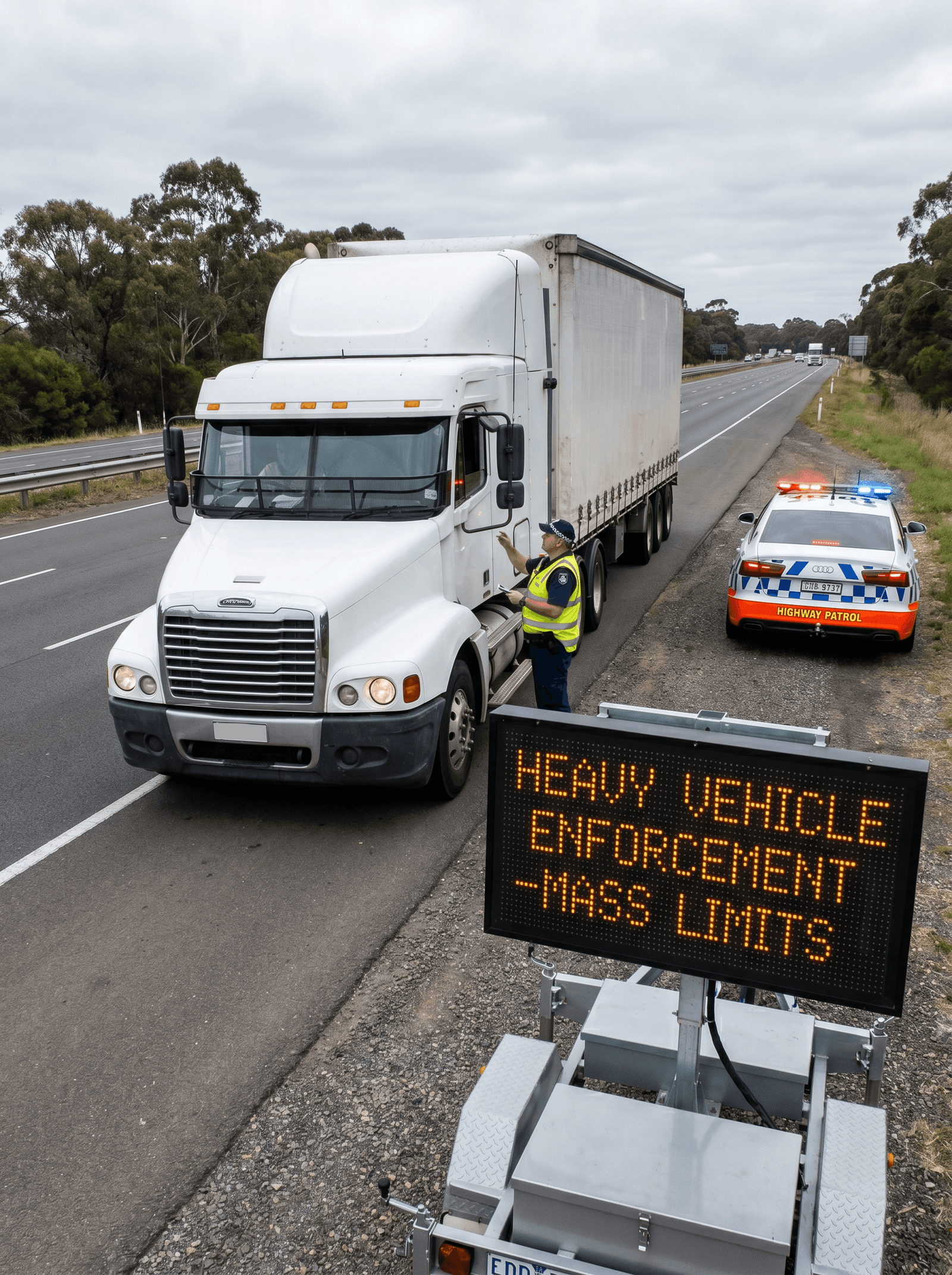
What is a Heavy Vehicle Mass Offence?
A mass offence occurs when a heavy vehicle exceeds a lawful mass limit.
This may include:
- Gross Vehicle Mass (GVM)
- Gross Combination Mass (GCM)
- Axle mass limits
- Axle group mass limits
- Manufacturer mass limits
- Permit limits
- Notice conditions
- Concessional Mass Limits (CML)
- Higher Mass Limits (HML)
- Special permit conditions
Mass offences can apply to a single axle, axle group or the entire vehicle combination.
Why the NHVR Takes Mass Offences Seriously
The NHVR considers overloaded vehicles to create risks including:
- Serious crashes
- Vehicle instability
- Rollovers
- Increased braking distance
- Damage to roads
- Damage to bridges
- Public safety risks
- Infrastructure damage
The greater the overload, the greater the enforcement response.
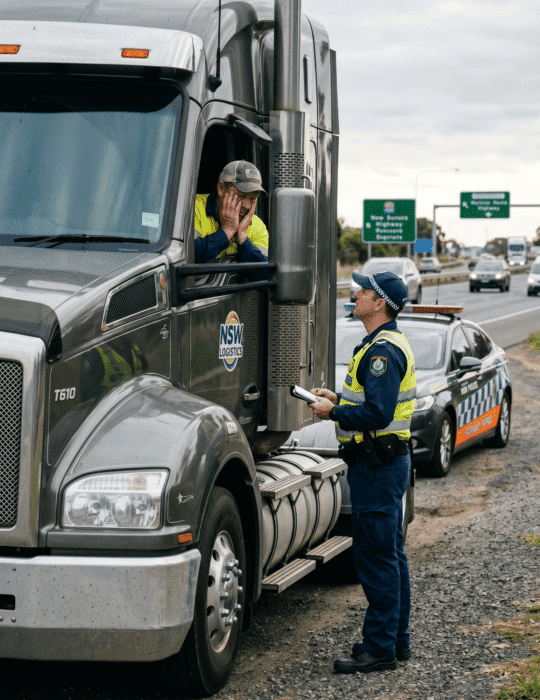
Categories of Mass Breaches
Categories of Mass Breaches
Minor Risk Breach
A minor risk breach occurs where the overload falls below the threshold for a substantial risk breach. Typically involves:
- Small overloads
- Lower enforcement responses
- Infringement notices in many cases
Substantial Risk Breach
A substantial risk breach occurs when the mass reaches the higher of:
- 105% of the maximum permitted mass; or
- 0.5 tonnes above the limit.
Examples:
- Axle limit = 6 tonnes
- Actual weight = 6.4 tonnes
or
- GVM limit = 20 tonnes
- Actual weight = 21 tonnes
Severe Risk Breach
A severe risk breach occurs when the mass reaches:
- 120% of the maximum permitted mass.
These are among the most serious mass offences prosecuted by the NHVR. Examples of permitted mass limits seen in NHVR enforcement matters include:
- 120%
- 123%
- 129%
- 134%
- 221%
Where a vehicle exceeds its maximum permitted loaded weight.
Potential consequences:
- Infringement notices
- Court prosecution
- Compliance history impacts
- Vehicle grounding until compliant
Where a prime mover and trailer combination exceeds its lawful maximum mass.
Potential consequences:
- NHVR enforcement action
- Court proceedings
- Chain of Responsibility investigations
One of the most frequently detected breaches.
Potential consequences:
- Immediate defect concerns
- Increased enforcement attention
- Vehicle movement restrictions
Often detected in:
- Tippers
- Quarry operations
- Construction transport
- Agricultural transport
Often detected in:
- Significant fines
- Prosecution
- Vehicle detention
Including:
- Tandem axle groups
- Tri-axle groups
- Quad axle groups
Potential consequences:
- Substantial or severe risk categorisation
- Court attendance
- Increased scrutiny of loading practices
Even if statutory mass limits are complied with, exceeding the manufacturer's limits may still constitute an offence.
Applies where operators exceed mass limits specified in:
- Access permits
- Class 1 permits
- Class 3 permits
- Notices
Applies to operators using:
Potential consequences:
- Loss of accreditation
- Permit issues
- Regulatory investigation
The following are the most common mass-related offences encountered in the heavy vehicle industry.
Who Can Be Charged?
One of the biggest misconceptions in transport law is that only the driver gets charged. That is wrong. The HVNL allows liability to extend across the Chain of Responsibility. Depending on the circumstances, multiple parties may be investigated or prosecuted.
Potential parties include:
- Drivers
- Operators
- Employers
- Schedulers
- Consignors
- Consignees
- Packers
- Loaders
- Loading managers
- Company directors
- Executive officers

Other Consequences Beyond Fines
Many operators focus only on the dollar value of the fine. That is often the smallest problem. Mass offences can also lead to:
Court Proceedings:
You may be required to attend court and defend allegations.
Vehicle Grounding:
The vehicle may not continue operating until compliant.
Delays And Downtime:
Lost productivity can exceed the value of the fine itself.
Chain Of Responsibility Investigation:
The NHVR may investigate upstream parties.
Compliance History Issues:
Repeated breaches can attract greater regulatory scrutiny.
Accreditation Consequences:
Potential impacts on NHVAS accreditation.
Reputational Damage:
Particularly for transport companies operating under contracts with major customers.
Director Exposure:
Directors and officers may face personal exposure where systems are inadequate
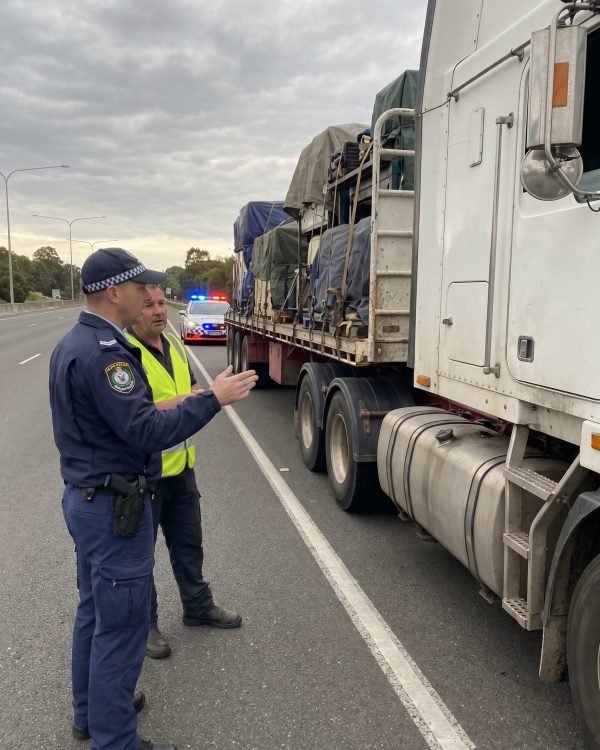
Why Mass Offences Happen
In our experience, most mass offences are not caused by deliberate misconduct.
Common causes include:
- Incorrect load estimates
- Faulty weight calculations
- Incorrect loading practices
- Tight delivery schedules
- Miscommunication between parties
- Inadequate weighing procedures
- Poor compliance systems
- Inaccurate load documentation
- Incorrect permit assumptions
- Lack of supervision
Why Engage Eric Navea Legal?
Not every traffic or criminal lawyer understands:
- NHVR investigations
- Heavy Vehicle National Law
- Chain of Responsibility
- Mass, dimension and loading offences
- Enforcement practices
- Heavy vehicle compliance systems
At Eric Navea Legal, we act for:
- Owner drivers
- Fleet operators
- Transport companies
- Directors
- Executive officers
- Businesses facing NHVR investigations
If you’ve received an infringement notice, court attendance notice, or compliance notice, or are under investigation, obtaining advice early can make a material difference to the outcome.
- 10+ Years Experience
- One-on-one with Eric
- Personalised advice tailored to your case
Frequently Asked Questions
Yes.
Many HVNL offences do not require proof that you intentionally overloaded the vehicle.
No. NHVR says a vehicle or combination’s legal mass is governed by several factors, and the mass requirements can apply at axle, axle-group, axle-spacing, or combination level. A truck can therefore be in breach even if the total figure looks close.
NHVR says a minor mass breach is up to 4.99% over the permitted mass, a substantial breach is the higher of 5% to 19.99% over the permitted mass or 0.5 tonnes, and a severe breach is 20% or more over the permitted mass. NHVR also says the lower limit of a severe mass breach is 120% of the maximum mass.
The NHVR 2025/26 schedule lists the maximum court penalty for a minor mass breach at $5,470 and the infringement amount at $547.
The NHVR 2025/26 schedule lists the maximum court penalty for a substantial mass breach at $8,250 and the infringement amount at $825.
For a severe mass offence, NHVR’s 2025/26 snippet confirms that the penalty increases by an additional $570 for every extra 1% over a 120% overload, with that extra component capped at $22,790. NHVR also says the more serious offences are not infringeable and must go to court
Yes.
Multiple parties can be investigated and prosecuted under the Chain of Responsibility framework.
That can change the legal analysis. NHVR says CML allows operation above GML for accredited operators, HML requires the relevant accreditation arrangements, and a vehicle under a mass exception is assessed against the exception limits if it breaches those limits.
That depends on the specific offence and circumstances.
Yes.
Directors and executive officers can face liability in appropriate circumstances.
Potentially.
The facts and evidence must be carefully reviewed.
That does not automatically remove liability.
The NHVR may investigate multiple parties.
Yes.
A severe risk breach involves mass reaching 120% or more of the applicable limit and is treated very seriously by regulators and courts.
Seek legal advice immediately. Early intervention often provides the greatest opportunity to protect your position.

Charged With A Heavy Vehicle Mass Offence?
If you’ve been stopped by the NHVR, received an infringement notice, been directed to a weighbridge, or have been served with court documents, now is the time to act.
The sooner you obtain legal advice, the sooner you can understand your options, protect your business, and put a strategy in place.
- Heavy vehicle law is what we do.
- Mass offences are what we defend.
- Get experienced legal advice before making your next move.
Talk with our lawyer now!
We'll be in touch in 24 hours
Disclaimer: The information on this page was compiled in June 2026 and is intended for general informational purposes only. The National Heavy Vehicle Regulator (NHVR) may update legislation, penalties, policies, and enforcement practices from time to time. While every effort has been made to ensure the accuracy of the information at the time of publication, this page may not reflect the most current requirements and should not be relied upon as legal advice. Readers should refer to the NHVR’s official publications and seek professional advice where appropriate. https://www.nhvr.gov.au/