Heavy Vehicle Load Offences

Load restraint and load placement breaches for drivers, operators and transport businesses across NSW

Heavy vehicle load offences

Facing a Load Offence?

Received an NHVR infringement notice, had your truck intercepted, or been issued with a Court Attendance Notice for a load restraint breach? You’re in the right place.

Load offences are some of the most misunderstood offences under the Heavy Vehicle National Law (HVNL). Many operators believe that if the load is physically on the trailer, everything is fine.

That’s wrong.

A load can be legal in weight, legal in dimensions, and still be illegal because it has not been loaded, positioned or restrained correctly.

A loading breach can lead to:

  • Infringement notices
  • Court Attendance Notices
  • NHVR investigations
  • Improvement notices
  • Chain of Responsibility investigations into the business
  • Damage to your reputation with customers

At Eric Navea Legal, we defend truck drivers, owner-drivers, transport operators, directors and heavy vehicle businesses facing NHVR investigations and prosecutions.

If you’ve been contacted by the NHVR, issued with an infringement notice or served with court documents, obtaining legal advice early can make a significant difference to the outcome.
Request a Confidential Consultation

    The notice or other documents. PDF, photo or Word, up to 10MB.

    What Is a Heavy Vehicle Load Offence?

    Under the Heavy Vehicle National Law, a heavy vehicle must be loaded:

    • In a way that the placement of the load does not make the vehicle unsafe or unstable
    • In a way that the load is not likely to fall or be dislodged from the vehicle
    • Using an appropriate system to restrain the load

    The load must also be placed, secured or restrained in a way that meets the loading performance standards.

    In simple terms: If the load can move, shift, fall, roll, slide, tip, bounce or affect the stability of the vehicle, you may have committed a loading offence.

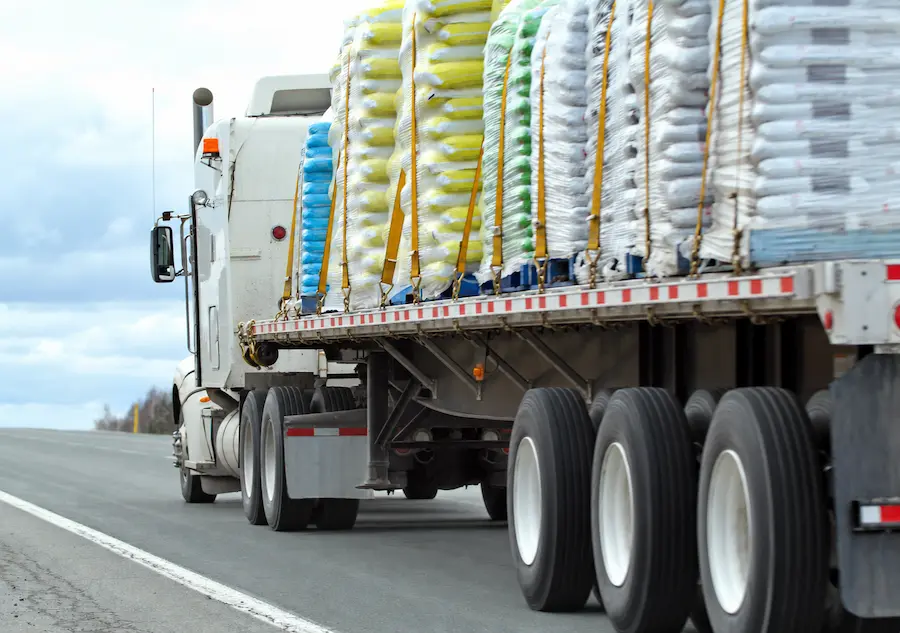
    Heavy vehicle carrying a restrained load

    Why the NHVR Takes Load Offences Seriously

    Poorly loaded vehicles and badly restrained loads can cause injuries and deaths when:

    The NHVR specifically states that all parties involved in transport activities share responsibility for loading safety. This means responsibility doesn’t stop with the driver.

    The Performance Standards and the Load Restraint Guide

    Colourful cargo truck in motion

    The loading performance standards set the minimum force a load restraint system must be able to withstand in each direction. They are the legal benchmark for whether a load was properly restrained.

    The NHVR’s Load Restraint Guide gives information to help operators meet those standards. The NHVR describes it as an information guide only, not a legal document. The 2018 edition remains current and valid for use following the 2025 update.

    Many loading cases turn on these details: what restraint method was used, how many restraints, their condition and how they were positioned.

    Heavy Vehicle Load Offences

    Driving A Heavy Vehicle That Does Not Comply With Loading Requirements

    Under section 111 of the HVNL, a person must not drive a heavy vehicle that does not comply with the loading requirements, or permit another person to drive it.

    Examples include:

    • Inadequate load restraint
    • Unsafe load positioning
    • Unstable loads
    • Loads capable of shifting during transport
    • Loads capable of falling from the vehicle
    • Failure to use appropriate restraint equipment

    Failing To Properly Restrain A Load

    A load must be restrained using an appropriate restraint system. Examples include:

    • Insufficient straps
    • Damaged straps
    • Incorrect chains
    • Incorrect restraint angles
    • Inadequate blocking or bracing
    • Failure to follow accepted restraint methods

    Unsafe Load Placement

    Even when a load is secured, it can still be illegal if it is positioned incorrectly. Examples include:

    • Incorrect weight distribution
    • Load placement causing instability
    • Elevated rollover risk
    • Uneven axle loading
    • Unsafe centre of gravity

    Permitting A Vehicle To Travel With An Unsafe Load

    Operators, employers and businesses may commit offences by allowing a vehicle to travel with a non-compliant load. This is particularly important for:

    • Transport companies
    • Fleet operators
    • Directors
    • Dispatch managers
    • Supervisors

    Chain of Responsibility (CoR) Loading Breaches

    The NHVR’s Chain of Responsibility laws mean multiple parties can be liable for loading offences. Potentially liable parties include:

    • Operators
    • Employers
    • Prime contractors
    • Schedulers
    • Consignors
    • Consignees
    • Loaders
    • Packers
    • Executives and company directors

    The NHVR’s guidance specifically names the loader or restraint applier, the packer, the party that lets the vehicle onto the road, the driver and their employers as parties who may be treated as permitting a non-compliant vehicle to be driven.

    Load Offence Penalties

    The NHVR grades loading breaches by risk as minor, substantial or severe. The maximum penalties for an individual are:

    Breach Maximum court penalty Infringement amount
    Minor risk $4,230 $423
    Substantial risk $7,060 $706
    Severe risk $14,120 Not available. Goes to court
    Rear projection warning signals $4,230 $423
    Not complying with an officer’s requirement after a loading breach $14,120 $1,412 (minor and substantial only)

    The NHVR’s guidance puts the maximum for a business in the worst category at more than $68,000. Where a business breaches its Primary Duty, the penalties are much higher.

    Source: NHVR Schedule of Infringement Penalties and Demerit Points, 1 August 2026 to 30 June 2027. Loading offences don’t carry demerit points. Amounts are indexed every year.

    What Happens If the Load Falls Off?

    This is where things become much more serious. A fallen load is likely to lead the NHVR to look beyond the driver, at how the load was planned, placed and restrained, and at the loading practices of the business.

    Possible consequences include:

    Get advice before you give any explanation to an officer or investigator.

    Primary Duty Exposure

    In serious cases, loading failures can escalate beyond a simple loading offence. The NHVR may investigate whether a business breached its Primary Duty under the HVNL.

    The NHVR says a Primary Duty breach can be prosecuted even if no incident or crash occurs, and a pattern of non-compliance can be evidence that a business failed to ensure safety.

    The NHVR describes Primary Duty breaches as among the most serious offences under the HVNL and notes that penalties can be substantial, with the most serious cases potentially involving imprisonment.

    This commonly arises where businesses:

    • Have no load restraint systems
    • Ignore known loading risks
    • Fail to train staff
    • Repeatedly breach loading requirements
    • Lack supervision and compliance processes

    What the NHVR Expects From Transport Businesses

    The NHVR’s guidance on loading suggests controls such as:

    If you’re not sure your business would stand up to an NHVR review, Eric can look at your loading procedures before there’s a problem.

    Defences to Load Offences

    Every case is different. Potential issues requiring detailed legal assessment include:

    Early legal advice can be critical.

    How Eric Can Help

    If you’re facing a loading or load restraint offence, Eric can help with:

    Court Representation

    • Local Court matters
    • Sentencing submissions
    • Defended hearings
    • Appeals

    Business Representation

    Driver Representation

    Strategic Advice

    • Loading and packing plans
    • Load restraint procedures
    • Primary Duty compliance
    • Responding to the NHVR

    Recent Results for Transport Operators

    Multiple Overmass Offences — Liverpool Local Court

    $12,000 total fines.

    Severe Overmass — Parramatta Local Court

    $7,500 fine.

    Case outcomes depend on the individual facts and circumstances of each matter. Past results do not guarantee or predict future outcomes.

    See All Results for Transport Operators →

    Latest Articles

    Practical guides from Eric Navea, written for transport businesses and drivers.

    View all articles

    Latest articles will load here on the live page.

    Load Offence FAQs

    Is a load offence the same as a mass offence?

    No. Mass offences are about weight: a vehicle or axle group carrying more than its limit. Loading offences are about how the load is placed and restrained. A vehicle can be well within its mass limits and still breach the loading requirements because the load was unstable or not properly secured.

    What are the loading requirements for a heavy vehicle?

    The NHVR says a heavy vehicle must be loaded so that the placement of the load does not make the vehicle unsafe or unstable, so that the load is not likely to fall or be dislodged, and using an appropriate system to restrain the load. The load must also be placed, secured or restrained in a way that meets the loading performance standards, which set the minimum force a restraint system must withstand in each direction.

    Does the load have to move or fall off for there to be an offence?

    No. The test is whether the load is likely to fall or be dislodged and whether it is restrained using an appropriate method, not only whether something actually moved on the trip. That said, the facts still matter: how many restraints were used, their condition, how they were positioned and whether the method met the performance standards. Photos and loading records from the day can make a real difference.

    What happens if part of the load falls off?

    The matter becomes much more serious. The NHVR points out that loads falling onto other vehicles or pedestrians, and drivers swerving to avoid fallen items, cause injuries and deaths. A fallen load is likely to lead the NHVR to look beyond the driver to how the load was planned, placed and restrained, and at the loading practices of the business. Get advice before giving any explanation.

    Do I have to follow the Load Restraint Guide?

    The NHVR describes the Load Restraint Guide as an information guide only, not a legal document. The legal obligation is to meet the loading requirements and performance standards, and the Guide provides information to help you do that. The NHVR also says the 2018 edition remains current and valid for use following the 2025 update.

    Can a driver be fined even if somebody else loaded the truck?

    Yes. Under section 111 of the HVNL, a person must not drive a heavy vehicle that does not comply with the loading requirements, or permit someone else to drive it. The driver is usually the person at the roadside, but the NHVR’s guidance says the loader or restraint applier, the packer, the party that let the vehicle onto the road and the driver’s employer can also be treated as having permitted it.

    Can the business or a director be prosecuted?

    Yes. Every party in the Chain of Responsibility has a primary duty to ensure, so far as is reasonably practicable, the safety of its transport activities, and executives must exercise due diligence to make sure the business complies. The NHVR says a primary duty breach can be prosecuted even if no incident or crash occurs. Courts can also make orders beyond fines, such as a Supervisory Intervention Order requiring a company to put better safety systems in place, or a prohibition order excluding a person from transport activities.

    What are the penalties for a loading offence?

    Under the NHVR’s schedule for 1 August 2026 to 30 June 2027, the maximum penalty for an individual is $4,230 for a minor risk breach (infringement $423), $7,060 for a substantial risk breach (infringement $706) and $14,120 for a severe risk breach, which has no infringement option and goes to court. The NHVR’s guidance puts the maximum for a business in the worst category at more than $68,000. Loading offences do not carry demerit points.

    What can an officer do at the roadside about a loading breach?

    The HVNL gives authorised officers specific powers for minor, substantial and severe risk breaches of a loading requirement. Failing to comply with a requirement made under those powers is a separate offence with a maximum penalty of $14,120. For minor and substantial breaches it can be dealt with by a $1,412 infringement notice; for severe breaches it goes to court. If you are given a direction, comply with it and get advice afterwards.

    Are rear-projection warning signals a separate offence?

    Yes. When a load projects from the rear of a vehicle, the Mass, Dimension and Loading National Regulation requires warning signals. Not displaying them is a separate offence with a maximum penalty of $4,230 (infringement $423). How far a load projects is also a dimension issue, so the same load can lead to a dimension offence as well.

    Related Heavy Vehicle Matters

    Charged With a Heavy Vehicle Load Offence?

    A loading offence is not just a fine.

    It can affect your business, your contracts and your reputation. Whether you’re a driver, owner-driver, transport operator or company director, getting advice early can make a real difference.

    If you’ve received an NHVR infringement notice, Court Attendance Notice, improvement notice or investigation letter about a loading offence, send through what you’ve received and Eric will be in touch about next steps.

    Call Eric 0401 937 269

    Request a Confidential Consultation

      The notice or other documents. PDF, photo or Word, up to 10MB.

      This page is general information only and does not replace legal advice about your specific matter. It was last reviewed in October 2026. The NHVR may update the law, penalties and policies from time to time, so check the NHVR’s official publications at nhvr.gov.au.