Heavy Vehicle Fatigue Offences

Defence for NHVR work and rest hour breaches for truck drivers and transport operators across NSW

Heavy vehicle truck on a long Australian drive

Facing a Fatigue Offence?

Received an NHVR infringement notice, under investigation for a fatigue breach, or facing court over work and rest hour allegations? You’re in the right place.

Fatigue offences are among the most heavily enforced offences under the Heavy Vehicle National Law. A fatigue breach can lead to significant fines, court proceedings and regulatory investigations, and for transport operators it can raise Chain of Responsibility questions about the whole business.

Eric will explain what you’ve been charged with, how the breach was worked out and what your options are.

Request a Confidential Consultation

    What Is a Heavy Vehicle Fatigue Offence?

    Drivers of fatigue-regulated heavy vehicles must not work more than the maximum work hours, or rest less than the minimum rest hours, for their work and rest hours option. A fatigue offence generally involves:

    • Works longer than permitted
    • Fails to take required rest breaks
    • Fails to take required night rest breaks
    • Exceeds maximum work limits
    • Fails to comply with BFM or AFM accreditation conditions
    • Work diary and record keeping breaches (see Logbook Offences)
    • Drives while impaired by fatigue
    • Causes or permits another person to breach fatigue laws

    The rules apply whether you work under standard hours, Basic Fatigue Management (BFM), Advanced Fatigue Management (AFM), Alternative Compliance Hours (ACH) or exemption hours.

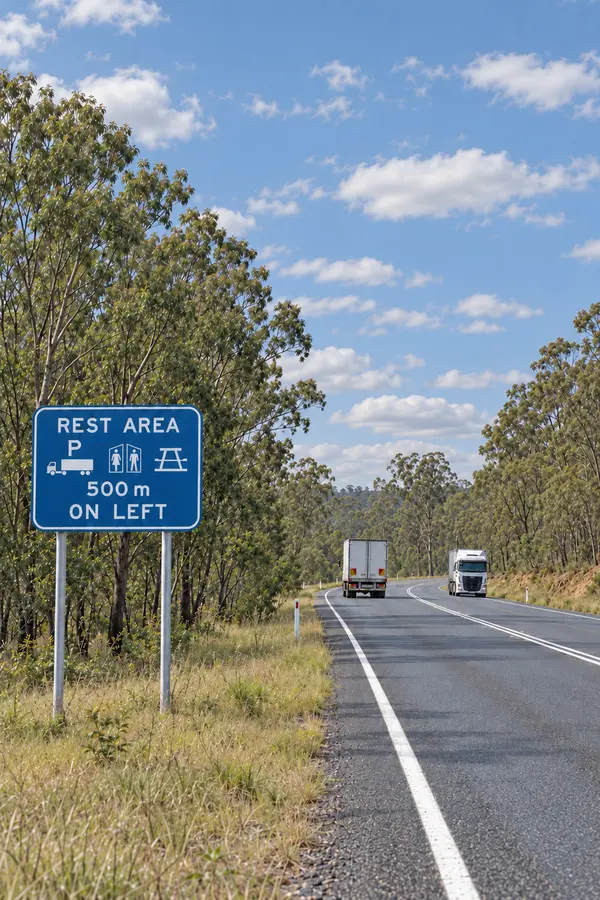
    Heavy vehicles parked at a truck rest area

    What Counts as Work Time?

    Many fatigue breaches come from counting time wrongly. Under the NHVR’s rules, work time isn’t just driving. It includes any task relating to the use of the vehicle, such as:

    • inspection, servicing or repair work
    • loading and unloading, or attending to the load or passengers
    • cleaning or refuelling
    • recording information in a work diary or another document
    • supervising or helping someone else do any of these tasks
    Read more about work diary and logbook offences

    Standard Hours for Solo Truck Drivers

    Under standard hours, a solo truck driver must not work more than the maximum, and must rest at least the minimum, in any of these periods:

    Standard hours for solo truck drivers
    In any period of Maximum work time Minimum rest time
    5½ hours 5¼ hours 15 continuous minutes
    8 hours 7½ hours 30 minutes
    11 hours 10 hours 60 minutes
    24 hours 12 hours 7 continuous hours of stationary rest

    Longer periods also apply, including night rest requirements. A night rest is 7 continuous hours of stationary rest taken between 10pm on one day and 8am the next. BFM, AFM and ACH each have their own limits.

    Source: the NHVR’s National Driver Work Diary. The limits for buses and two-up drivers are different.

    Why Fatigue Offences Are Taken So Seriously

    The NHVR treats fatigue breaches differently from many other traffic offences.

    Unlike ordinary speeding or parking offences, fatigue offences are considered safety-critical because fatigue significantly increases the likelihood of:

    • Fatal crashes
    • Serious injury collisions
    • Loss of vehicle control
    • Driver error
    • Reduced reaction times
    • Poor decision making
    Tired truck driver showing signs of fatigue

    The Four Categories of Fatigue Breaches

    The NHVR categorises work and rest breaches by risk: minor, substantial, severe and critical. Critical risk is used only for fatigue breaches. Where a breach falls depends on how far over the limit it was and which work and rest hours option applied.

    1. Minor Risk Breach

    The lowest category.

    A minor breach usually occurs where work limits are exceeded or rest requirements are missed by a relatively small amount.

    Even though it is called “minor”, it still remains an offence and can still attract significant penalties.

    No demerit points.

    2. Substantial Risk Breach

    A more serious breach involving greater departures from legal work and rest requirements.

    No demerit points.

    3. Severe Risk Breach

    A severe risk breach occurs when fatigue requirements are exceeded to a level creating a substantial safety risk.

    Severe risk breaches can attract:

    • Large fines
    • Court proceedings
    • Regulatory scrutiny

    3 demerit points.

    4. Critical Risk Breach

    The most serious fatigue category available under the HVNL. Fatigue is the only area of the HVNL with a “critical risk” category.

    Critical risk breaches generally involve:

    • Significant excess work hours
    • Serious rest deficiencies
    • Extreme fatigue exposure
    • High safety risks

    4 demerit points.

    Demerit points from the NHVR’s schedule of penalties, 1 August 2026 to 30 June 2027.

    The category decides the penalty you face, so checking how it was calculated is one of the first things Eric does.

    Common Fatigue Offences

    Exceeding Maximum Work Hours

    This occurs when a driver works longer than permitted under:

    • Standard Hours
    • BFM Hours
    • AFM Hours

    Working longer than allowed in any 5½, 8, 11 or 24 hour period, or over longer periods, under your hours option.

    The seriousness depends on how far the limit was exceeded.

    Failing to Take Minimum Rest

    Not taking the required rest breaks, or taking them in blocks that are too short.

    Failing to Take Night Rest

    Not taking the required 7 continuous hours of stationary rest between 10pm and 8am.

    Driving While Impaired by Fatigue

    Driving while sleepy, tired, drowsy or exhausted, even if you’re within your hours.

    Breaching BFM or AFM Conditions

    Working outside the limits or conditions of your accreditation.

    Work Diary Offences

    Not carrying a work diary, incomplete entries, or false or misleading entries.

    Logbook Offences

    Chain of Responsibility and Fatigue

    One of the biggest mistakes transport businesses make is assuming fatigue laws only apply to drivers. They don’t. Under Chain of Responsibility laws, the NHVR can investigate:

    • Employers
    • Directors
    • Schedulers
    • Operators
    • Prime contractors
    • Consignors
    • Consignees
    • Loading managers

    Every party in the Chain of Responsibility must take all reasonable steps to make sure a driver doesn’t drive while impaired by fatigue. It’s also an offence to make a request or contract that you know, or should reasonably know, would cause or encourage a driver to drive while fatigued.

    Tired truck driver in a heavy vehicle cabin

    For schedulers and employers, that means rosters, delivery times and contract terms can all be examined.

    Defending a Fatigue Charge

    Not every allegation is proven. Depending on the facts, the issues Eric examines may include:

    • which work and rest hours option applied on the day
    • how work time and rest time were counted
    • whether the breach category was worked out correctly
    • whether the work diary and other evidence are accurate and complete
    • whether someone else’s schedule or demands contributed

    Whether you’ve received an infringement notice, a Court Attendance Notice or an NHVR investigation letter, the earlier you get advice, the more options you may have.

    Recent Fatigue Results

    Multiple Fatigue Offences — Liverpool Local Court

    $2,250 in total fines.

    Critical Two-Up Rest Offence — Downing Centre Local Court

    $1,000 fine.

    Case outcomes depend on the individual facts and circumstances of each matter. Past results do not guarantee or predict future outcomes.

    See All Results for Truck Drivers →

    Latest Articles

    Practical guides from Eric Navea, written for transport businesses and drivers.

    View all articles

    Latest articles will load here on the live page.

    Fatigue Offence FAQs

    What is a heavy vehicle fatigue offence?

    It is a breach of the fatigue rules in the Heavy Vehicle National Law. Common examples are working more than the maximum work hours, resting less than the minimum rest hours for your work and rest hours option, or driving a heavy vehicle while impaired by fatigue.

    What is the most serious fatigue breach?

    A critical risk breach. The NHVR categorises breaches as minor, substantial, severe or critical, and the critical category is used only for fatigue breaches.

    How are fatigue breaches categorised?

    Work and rest breaches are graded by risk as minor, substantial, severe or critical. Where a breach falls depends on how far over the limit it was and which work and rest hours option applied. The category affects the penalty, so it is worth checking how it was calculated.

    Can I be charged for driving while fatigued even if I was within my hours?

    Yes. It is against the law to drive a heavy vehicle on a road while impaired by fatigue. The NHVR says the maximum work and minimum rest hours under each option are outer limits only, so staying within your hours does not mean you cannot be impaired by fatigue.

    What counts as work time?

    Work time is not just driving. It includes any task relating to the use of the vehicle, such as inspections, servicing or repairs, loading and unloading, attending to the load or passengers, cleaning or refuelling, and recording information in a work diary.

    What work and rest hours options are there?

    The options are standard hours, Basic Fatigue Management (BFM), Advanced Fatigue Management (AFM), Alternative Compliance Hours (ACH) under accreditation, and exemption hours under a permit or notice. Each has its own limits, so which option applied on the day matters.

    Can my employer or scheduler be charged for my fatigue breach?

    Possibly. Every party in the Chain of Responsibility must take all reasonable steps to make sure a driver does not drive while impaired by fatigue. It is also an offence to make a request or contract that would cause or encourage a driver to drive while fatigued. Rosters, delivery times and contract terms can all be examined.

    Does a work diary mistake automatically mean I’m guilty?

    Not necessarily. The evidence needs to be examined carefully, including which hours option applied, how work and rest time were counted and whether the work diary and other records are accurate and complete. Get advice before you answer questions about your entries.

    Can I go to court instead of paying a fatigue fine?

    Usually, yes. An infringement notice lets you pay the penalty or elect to have the matter decided by a court, and you can also ask the NHVR to review it. More serious fatigue offences go straight to court. Get advice before you choose.

    How much does it cost?

    It depends on the charge and whether the matter goes to court. Once Eric has seen your fine, notice or court papers, he will explain the likely scope of work and costs before you commit.

    Related Heavy Vehicle Matters

    Charged With a Heavy Vehicle Fatigue Offence?

    If the NHVR has contacted you, issued an infringement notice, started an investigation or served you with court documents, getting advice early can make a real difference.

    Your licence. Your livelihood. Your business. Send through what you’ve received and Eric will be in touch about next steps.

    Call Eric 0401 937 269

    Request a Confidential Consultation

      The notice or other documents. PDF, photo or Word, up to 10MB.

      This page is general information only and does not replace legal advice about your specific matter. It was last reviewed in October 2026. The NHVR may update the law, penalties and policies from time to time, so check the NHVR's official publications at nhvr.gov.au.